Colonial Williamsburg celebrates 100 years with free admission, grand procession
WILLIAMSBURG – Colonial Williamsburg is celebrating its 100th anniversary on Nov. 14 with free admission to the Historic Area and a lineup of special programming.
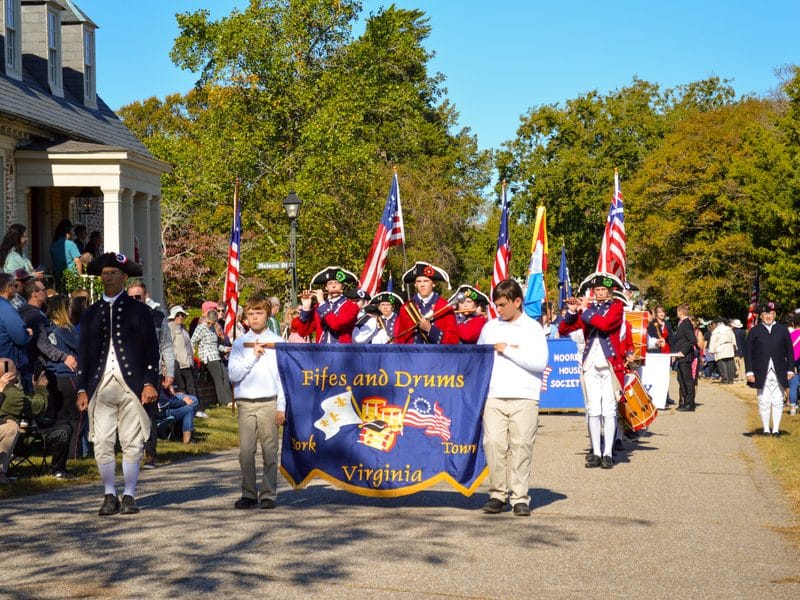
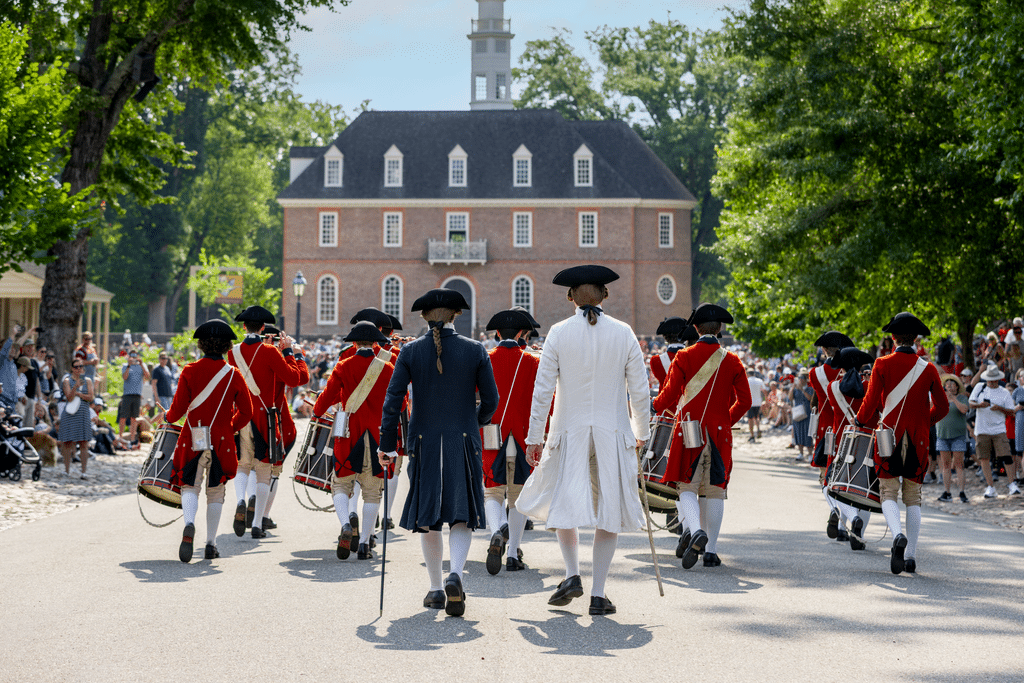
A Centennial Celebration at 11 a.m. will feature a “once-in-a-century” commemorative parade of Fifes and Drums, interpreters, horse-drawn carriages, community members, rare breed animals and special guests.
The procession will begin at Capitol Circle and make its way down historic Duke of Gloucester Street to the Courthouse. A ceremony will follow with appearances by W.A.R. Goodwin, John D. Rockefeller Jr. and Nation Builders.
Colonial Williamsburg Foundation CEO Carly Fiorina is slated to give an address focused on the legacy of the world’s largest living history museum and its enduring mission to bring our nation’s story to life.
Other highlights of the day include a free, guided tour at the Art Museums at 10 a.m. and a ticketed evening reception, “A Toast to the Next 100,” which will be held at the Williamsburg Lodge from 5 to 8 p.m.
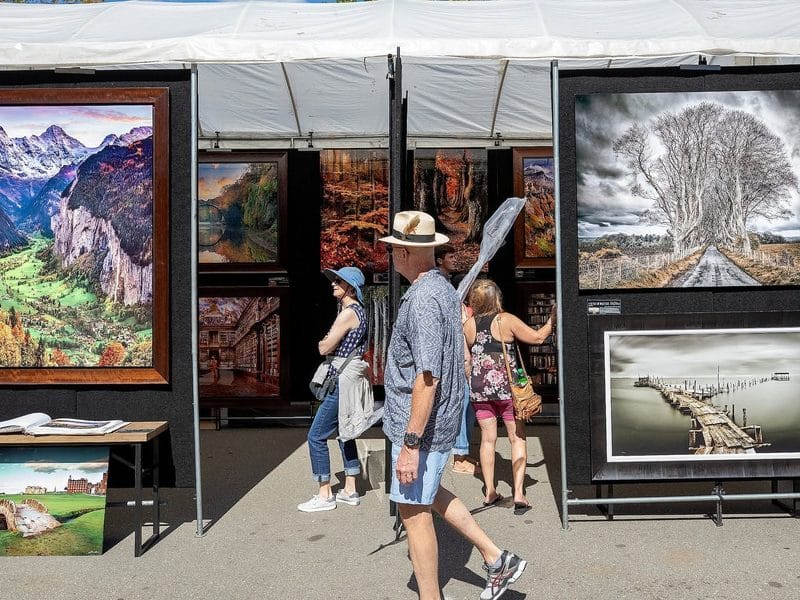
Katie McKinney, Margaret Beck Pritchard Curator of Maps and Prints, said staff spent several years curating “Colonial Williamsburg: The First 100 Years” – a new Art Museum exhibition that highlights the museum’s rich history.
“After 100 years, Colonial Williamsburg has become historic in its own right,” McKinney said. “We were fascinated by how we continue to build upon the foundations laid out by the work of our predecessors. Time and again we were reminded of our motto: ‘That the future may learn from the past.'”
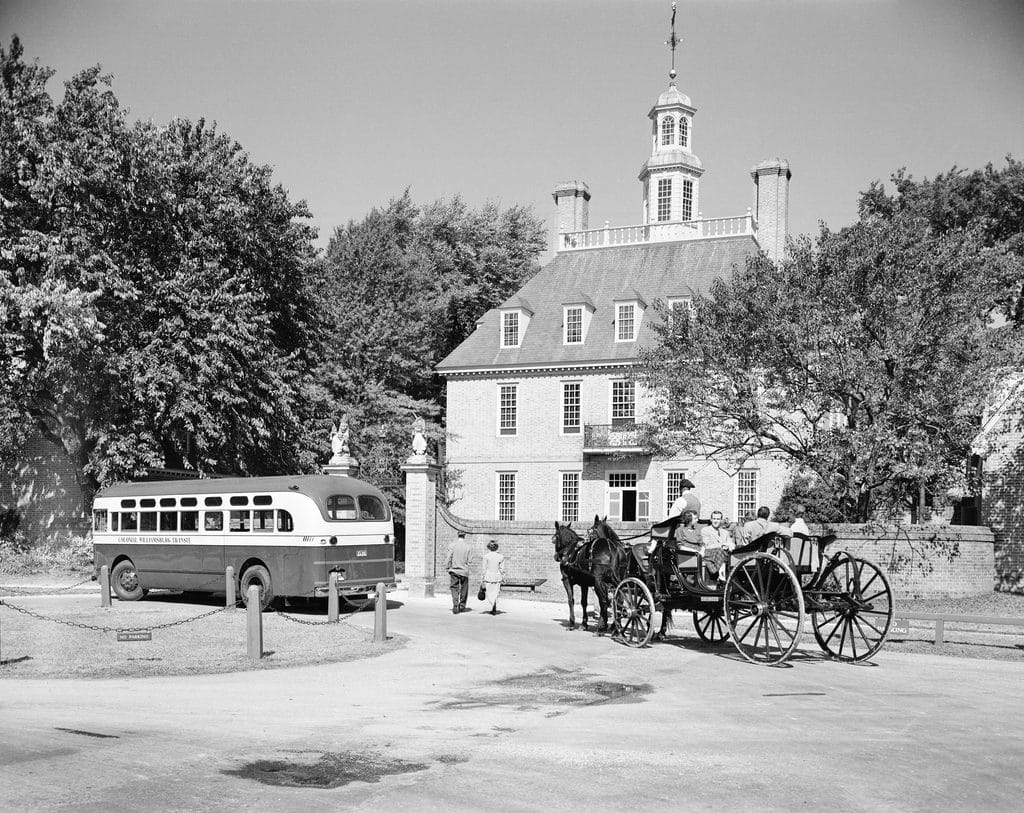
Colonial Williamsburg’s story began in 1924, when Rev. Dr. W.A.R Goodwin, the rector of Bruton Parish Church at the time, envisioned restoring the former colonial capital and shared the concept with the legendary John D. Rockefeller Jr. and his wife Abby Aldrich Rockefeller.
The initiative began as a humble effort to preserve Williamsburg’s 18th-century buildings but ultimately evolved into a full-scale restoration.
Crews of expert archaeologists, architects, historians and construction professionals poured into Williamsburg with the goal of breathing life back into the 18th-century village. The Governor’s Palace, the Capitol and the Raleigh Tavern were among the first buildings to be excavated and reconstructed.
Formal plans to convert the iconic 301-acre site into a museum began in 1926, but experts and researchers continued to rebuild and restore the colonial town over the next several decades. By the 1940s, the site had developed into a living colonial history museum with working craftspeople and recreated gardens.
Today, Colonial Williamsburg is widely recognized as a nationwide leader in archaeology, research and historic preservation.
Carly Fiorina, CEO of the Colonial Williamsburg Foundation, said the magnitude of Colonial Williamsburg’s impact can be felt in “each of the 89 original buildings” as well as in the Foundation’s programs and ongoing archaeology efforts.
“Colonial Williamsburg’s Historic Area is the only place in the world where visitors can literally walk in the footsteps of America’s founding generation,” Fiorina said.
Complimentary, single-day admission tickets for the Centennial Celebration on Nov. 14 can be reserved online at colonialwilliamsburg.org.
The Historic Area, Art Museums and Campbell Archaeology Center will be closed to the public on Nov. 15 as the Colonial Williamsburg Foundation dedicates the day to its employees, volunteers, retirees and families.
Thanks for reading! Will you help make our journalism possible?
The Triangle is a uniquely independent news source for Virginia's Historic Triangle and the surrounding region. We need our community's support to keep producing quality local journalism.
Author