Williamsburg Bray School to reopen to the public 250 years after its closure: ‘Remarkable’
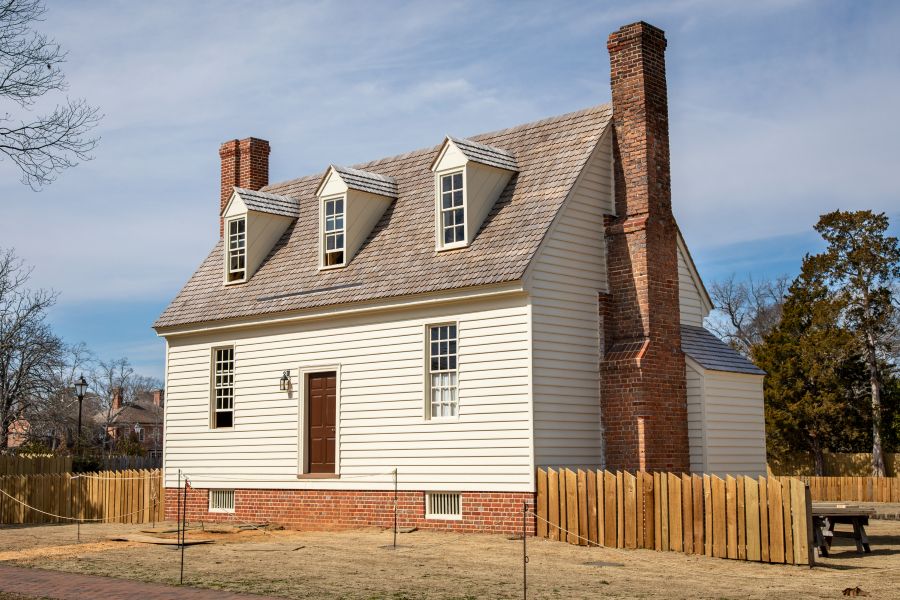
WILLIAMSBURG – More than 250 years after its closure, the Williamsburg Bray School is set to reopen its doors this week, commemorating its legacy as the oldest existing building in the United States dedicated to educating Black children.
On June 19, Colonial Williamsburg will officially unveil the restored building and begin to educate visitors about its complex history and impression upon early America.
“The fact that the building that housed the Williamsburg Bray School still exists is remarkable,” said Colonial Williamsburg President and CEO Cliff Fleet. “The most meaningful aspect of this project is that we are able to use it to share the stories of the students who attended.”
The 18th-century building, where as many as 400 free and enslaved Black students were taught between 1760 and 1774, was identified by the Colonial Williamsburg Foundation and William & Mary in 2020.
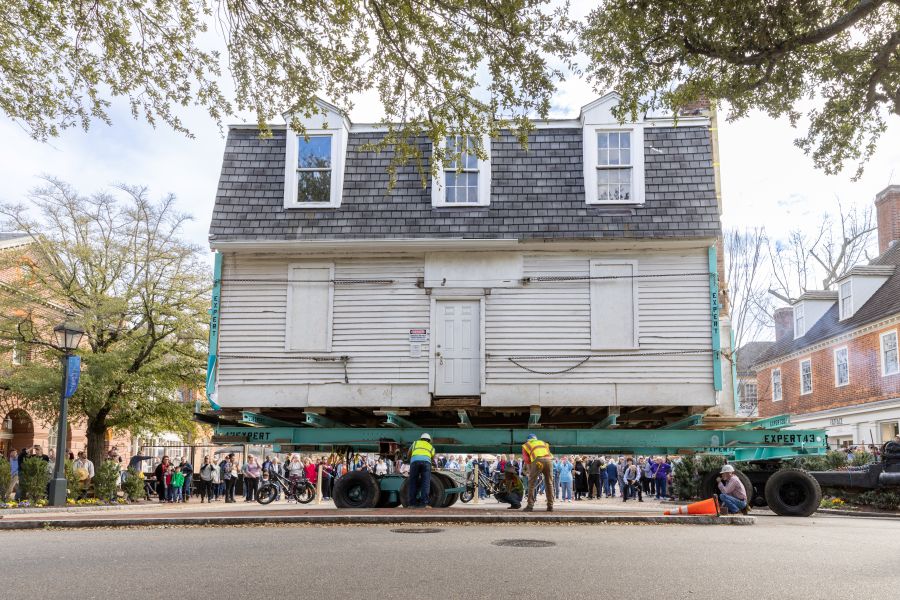
It was moved to the heart of the historic area in 2023, where it has been restored to its original appearance through the use of both modern and 18th-century techniques.
The school is named after Dr. Thomas Bray, a British clergyman who was dedicated to converting Blacks to the Christian faith.
After Bray died in 1730, a group known as The Associates of Bray began establishing schools intended to educate enslaved and free children of African descent in Britain’s North American colonies.
Research published by the Colonial Williamsburg Foundation reveals that the Associates enlisted the help of Benjamin Franklin, who visited Williamsburg in 1756 to receive an honorary degree from the College of William and Mary.
Franklin suggested Williamsburg as a potential location for the school. At his recommendation, the school’s first administrators were William Hunter, a local printer and postmaster, and Thomas Dawson, the president of the College of William and Mary and minister of Bruton Parish Church.
Ann Wager was hired as the teacher, and the school opened on September 29, 1760, in a small house located near William & Mary. The children who attended were between the ages of 3 and 10 years old.
While the Colonial Williamsburg Foundation has uncovered the names of 86 Bray School scholars, hundreds of other names were not recorded. Research into the history surrounding the school and the children who were educated there remains underway.
The restored Bray School will be admission-free in an effort to allow as many people as possible to experience it first-hand, according to the Colonial Williamsburg Foundation.
“The Bray School is a focal point for research, scholarship and dialogue regarding the complicated story of race, religion and education in Williamsburg and early America,” Fleet said.
Unrelated to its function as a school for Black children, the building’s structure and materials also provide a rare glimpse into the kind of building most Virginians likely would have lived in during the 1700s, according to Matt Webster, executive director of Colonial Williamsburg’s Grainger Department of Architectural Preservation.
“Here we have a building that likely represents what the vast majority of Virginians were living in,” Webster told Trend & Tradition Magazine. “Our hope is it’s going to reveal a lot of secrets. This is an incredibly important opportunity both to understand the Bray School and to understand Williamsburg in the 18th century.”
Many of the other surviving 18th-century buildings in Williamsburg were owned by elite members of society who made use of the highest-end materials available at the time, Webster noted.
To commemorate the opening of the school and the coinciding Juneteenth holiday, Colonial Williamsburg is offering free admission to everyone on June 19, from 9 a.m. to 5 p.m. Visitors can pre-egister here to receive their complimentary ticket.
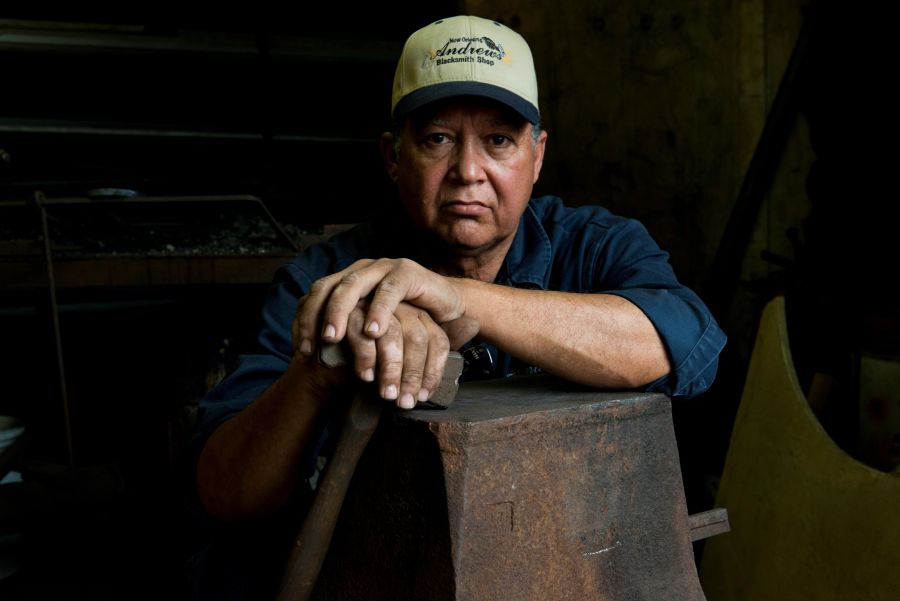
Special programming is slated to take place June 18 – 19 and will include talks and demonstrations by Master Blacksmith Darryl Reeves, the most celebrated architectural blacksmith in the Gulf South and an interactive sing-along program led by renowned educator and performer Dr. Kathy Bullock.
The Juneteenth event lineup also features presentations from award-winning storyteller and historical interpreter, Sheila Arnold; a celebration of the photography of Williamsburg’s first city-licensed African American photographer, Albert Durant and a community drum circle.
Additionally, the Colonial Williamsburg Foundation will partner with the Let Freedom Ring Foundation to break ground on the African Baptist Meeting House Groundbreaking on June 19 at 9 a.m.
The meeting house is at the site of the original permanent location of the First Baptist Church, one of the earliest African American congregations in the United States. A multi-year project is underway to excavate, study and reconstruct the historic site. For a full listing of Juneteenth programming, colonialwilliamsburg.org/juneteenth.
Colonial Williamsburg’s events will coincide with other Juneteenth activities across the Historic Triangle coordinated by the Juneteenth Community Consortium, an association of organizations throughout Greater Williamsburg founded to educate, commemorate and celebrate Juneteenth.
Juneteenth marks the anniversary of June 19, 1865, when thousands of enslaved people received the news that they were emancipated after Union forces arrived in Galveston, Texas, to enact President Abraham Lincoln’s Emancipation Proclamation, signed more than two years earlier.
Fleet said that Juneteenth continues to play a role in Colonial Williamsburg’s ongoing work to “inspire the future” by honoring the past.
“The stories told by new historic sites like the Williamsburg Bray School and the African Baptist Meeting House and Burial Ground, as well as the perspectives and experiences shared by our own world-class interpreters and special guests, give visitors the invaluable opportunity to make new discoveries about our shared past,” Fleet said.
Thanks for reading! Will you help make our journalism possible?
The Triangle is a uniquely independent news source for Virginia's Historic Triangle and the surrounding region. We need our community's support to keep producing quality local journalism.
Author