The Swarm Hotline: How local beekeepers are saving our pollinators
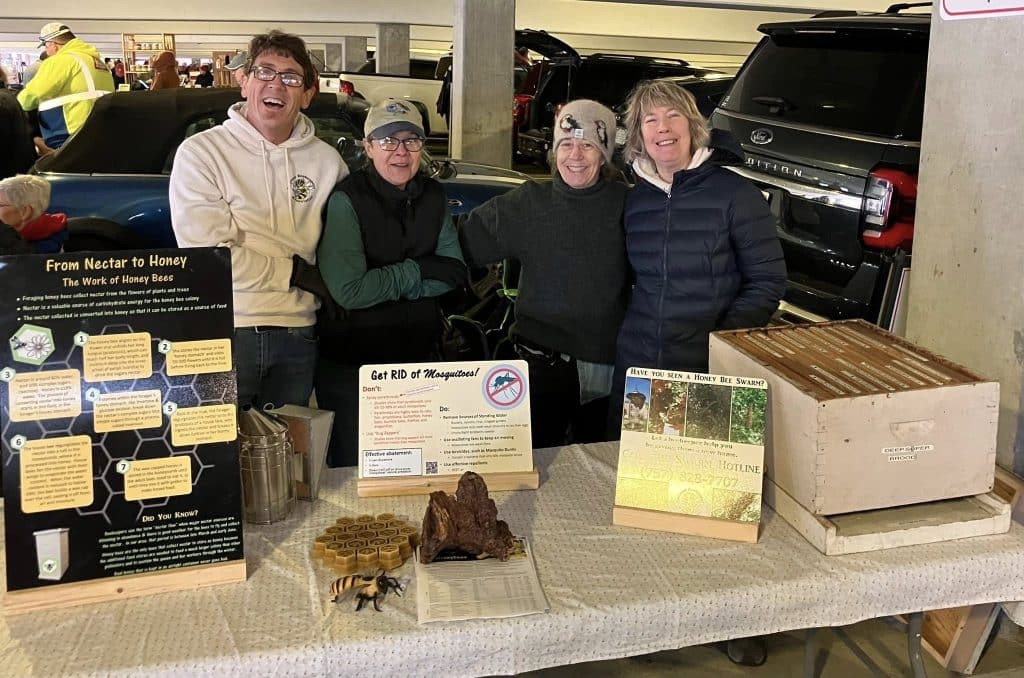
HISTORIC TRIANGLE – Each spring, honey bees swarm.
In groups of thousands, they leave their overcrowded hives to start a new colony and often settle in tree trunks.
But they can also alarm homeowners by settling temporarily in attics, grills, tree limbs or sheds.
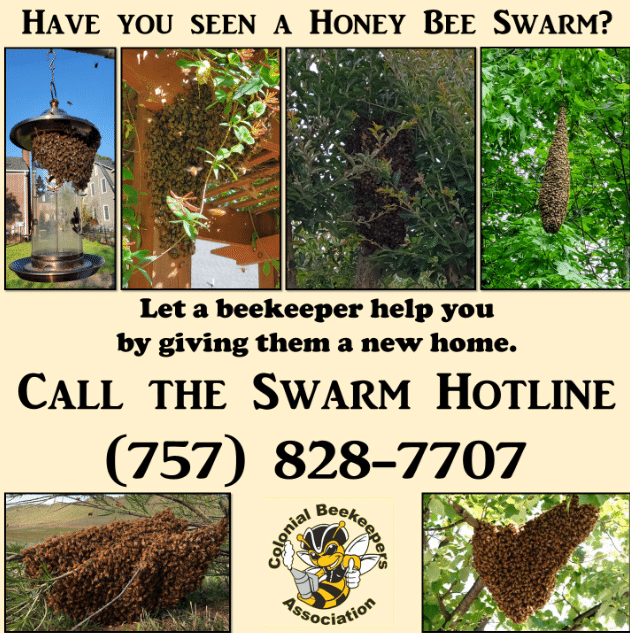
Instead of reaching for pesticides – which are illegal to use against honey bees in Virginia – the Colonial Beekeeper Association (CBA) urges residents to call their 24/7 Swarm Hotline at (757) 828-7707 for assistance.
Within an hour, a trained local beekeeper will arrive safely and relocate the bees to a new hive, without any extermination necessary.
The CBA is a local nonprofit organization dedicated to protecting honey bees and educating the public across the Historic Triangle with free educational programming and training.
All members are beekeepers and come from as far south as Hampton to as far north as Middlesex.
The idea for a public swarm removal service began years ago as part of the CBA’s commitment to responsible beekeeping. In 2021, the group streamlined its formerly lengthy process into what is now the Swarm Hotline.
When someone contacts the line, they are connected to an available beekeeper near them who can help immediately.
Most swarm removals are free of charge unless the bees have nested inside structures, which requires a more complex extraction.
Nathan S. Brauner, the president of the CBA, emphasized the importance of Swarm Hotline encounters in building a healthier relationship between people and a stigmatized insect: the bee.
“It really is a good way for us to further our educational mission for Colonial Beekeepers and to minimize negative interactions between people and honey bees,” Brauner said.
Despite often being misunderstood, honey bees have played a vital role in American history.
The honey bee is not native to North America and was introduced by the Virginia Company in Jamestown in 1622.
In the 17th century, honey bees were used solely to produce honey as a food and drink sweetener, but the bees quickly became an indispensable pollinator in American agriculture.
“This honey bee is the single most important insect to the founding of America,” State Delegate Patrick Hope said in an interview with NPR. “I’m surprised it took us so long to make that connection with the historical aspect.
In 2024, Hope led a bill to designate the European Honey Bee as the Virginia State Pollinator, which Governor Glenn Younkin signed into law.
“If we didn’t have the honey bee, then it would be very difficult for us to continue growing crops in the same way that we do,” Brauner said.
Today, honey bees are responsible for pollinating 80% of the food we eat; however, their populations are declining due to pesticides, habitat loss and disease.
Calling the Swarm Hotline instead of exterminators, planting bee-friendly gardens with native flowers and buying local honey can all support honey bee preservation.
By helping honey bees, and the 430 bee species native to Virginia, we help ourselves.
“Being good stewards of the environment actually helps us out quite a bit in our everyday lives,” Brauner said.
The CBA meets on the third Thursday of the month at St. George’s Brewery in Hampton. All are welcome to attend.
Their next event is National Honey Bee Day on August 16 at Brent and Becky’s in Gloucester.
For more information on the Swarm Hotline, other events or how to get involved, visit the CBA’s website at colonialbeekeepers.org.
Thanks for reading! Will you help make our journalism possible?
The Triangle is a uniquely independent news source for Virginia's Historic Triangle and the surrounding region. We need our community's support to keep producing quality local journalism.