JCC leaders to vote on large-scale battery storage facility amid safety concerns voiced by Grove residents
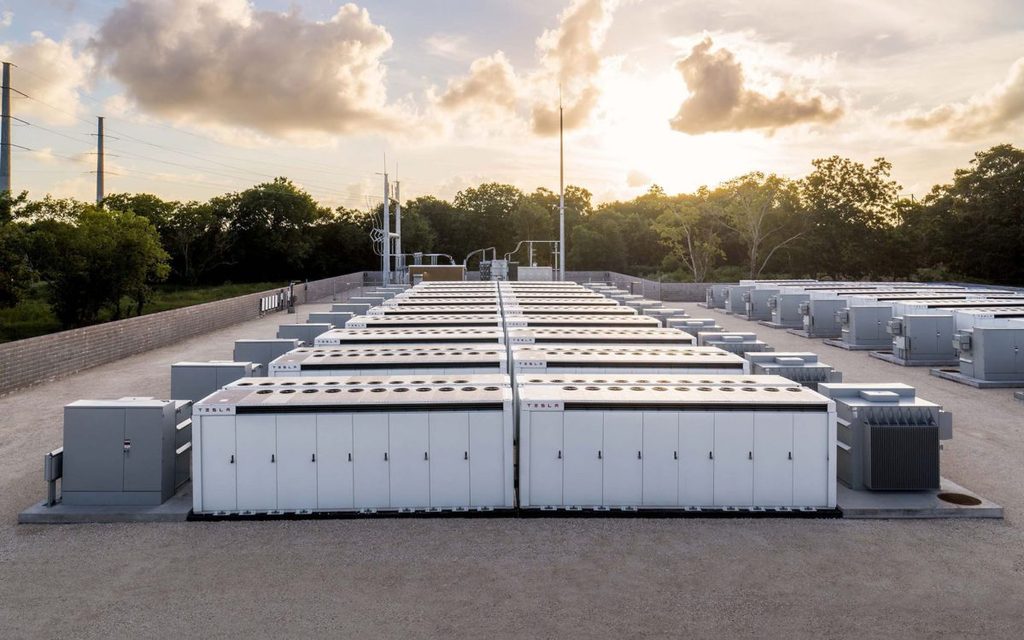
JAMES CITY COUNTY – The James City County Board of Supervisors is set to vote Tuesday on a proposed battery energy storage system (BESS) that has sparked strong opposition among residents of the Grove community.
The 650-megawatt Pelican Energy Storage installation would be built on approximately 220 acres of land that once housed the BASF acrylic fiber plant.
Battery storage facilities harness and store energy in battery cells, releasing power at times of peak demand or when the electric grid needs to stabilize.
But many Grove residents have expressed skepticism surrounding the project, saying the community has been subjected to over-industrialization for decades.
“It always seems like Grove is the dumping ground,” resident George Buskey told The Triangle News. “What is this facility doing for our community?”
Despite ongoing pushback, the James City County Planning Commission voted 5-2 in October to recommend approval of the project, sending the proposal to the Board of Supervisors for final review.
Pelican is a subsidiary of Tenaska, an Omaha, Nebraska-based company that develops energy infrastructure across the U.S.
A page on the company’s website describes the Grove project as if it is already underway, indicating a high degree of confidence that the facility will be approved.
“Tenaska is developing a battery energy storage system (BESS) in James City County,” the website states. “Our team looks forward to working with the local community to make the project — and its many benefits — a reality.”
At a September meeting hosted by Tenaska at the Abram Frink Jr. Community Center, several Grove residents told company representatives they were concerned about potential fire and environmental risks.
“BASF ended up causing contamination,” Buskey said. “Now, we’re talking about a battery storage site that could catch on fire. Worst case scenario, we would have to evacuate.”
While BESS fires have become increasingly rare, the Environmental Protection Agency (EPA) acknowledges that the facilities “have raised legitimate safety concerns” in many communities.
In New York – which houses one of the highest BESS concentrations in the nation – only three installations have caught fire out of a total of nearly 7,500.
Nonetheless, when fires do occur, a carefully coordinated response is necessary to mitigate potential dangers.
“Lithium battery fires are extremely difficult to extinguish and may reignite hours or days later,” the EPA states.
One of the most notorious battery storage fires unfolded in San Diego, CA, in 2004. Even though first responders promptly extinguished the blaze, periodic flare-ups continued for a week. The original fire started after just one of the site’s 24 battery cells ignited.
Other battery storage fires happened in Valley Center, CA, in 2003, Otay Mesa, CA, in 2004 and Moss Landing, CA, in 2005. Some exposed residents complained of health effects including headaches and sore throats, according to local news reports.
After the Moss Landing incident – which is widely regarded to be among the worst BESS fires in the U.S. – researchers discovered toxic metals in nearby wetlands linked to soot from the blaze.
Although air quality monitoring during and after that fire found no risks to public health, nearly 1,500 residents were forced to evacuate the city. No one was injured, but extensive environmental cleanup efforts were necessary.
Another high-profile BESS fire in 2019 resulted in injuries to four firefighters in Surprise, AZ, after flammable gasses built up in an indoor battery storage site, causing an explosion.
Most BESS fires are caused by a process called “thermal runaway” – a chain reaction that occurs when a battery cell becomes too hot, triggering a chemical response that generates even more heat. The result is the buildup of more gasses that cause the battery to burst, leading to a fire in the cell.
Water cannot sufficiently put out thermal runaway fires, according to the EPA.
Even after the flames in the faulty battery are extinguished, the liquid that carries the battery’s charge can reignite. Firefighters are usually instructed to focus on keeping people away from the area while treating nearby structures to prevent further spread.
Juner Zhu, co-founder of the MIT/Northeastern University for Battery Sustainability, said battery storage facilities can play an important role in bolstering energy infrastructure but noted that “fire is the biggest concern.”
Newer facilities are designed with more safeguards in place than their predecessors. Modern battery modules are built in isolation from each other, and each module contains its own monitoring system designed to extinguish flames quickly before they expand.
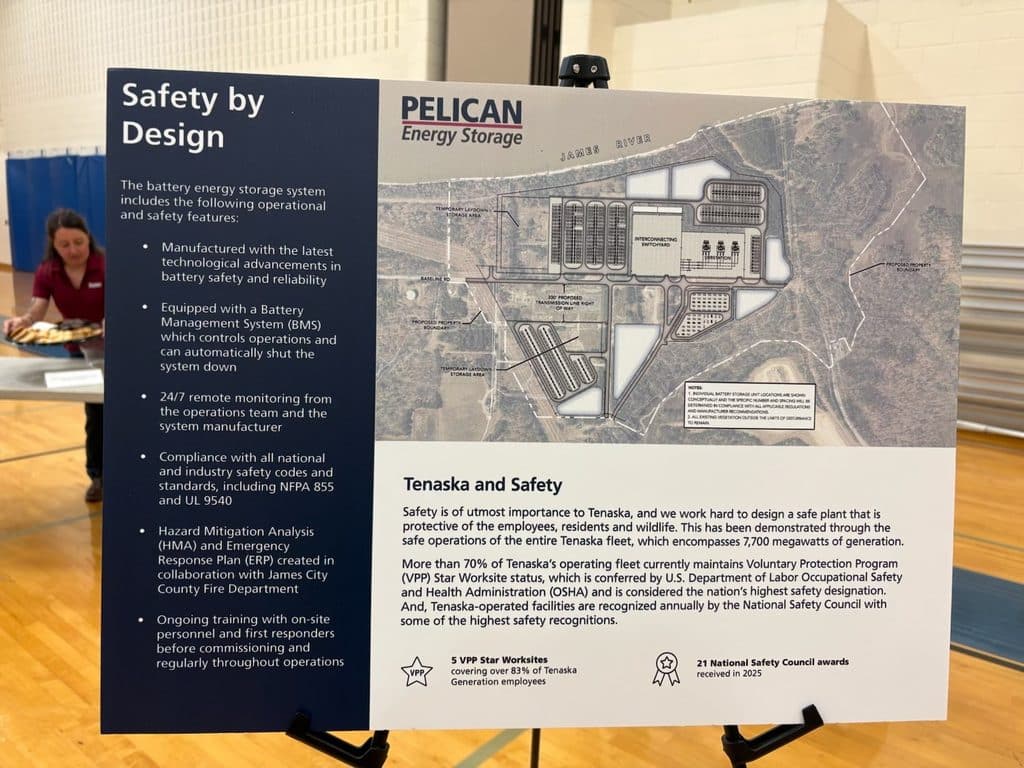
A Tenaska representative said the company is committed to following stringent safety standards and would work closely with local first responders and environmental agencies.
A recently created Frequently Asked Questions section posted on Pelican’s website states that the Tenaska strives to “design facilities that are protective of the employees, residents and wildlife.”
The company says it uses “sophisticated battery management systems” that continuously monitor and control equipment and facilities around the clock, with the ability to shut equipment down on demand.
Tenaska Community Relations Manager Jamie Wagner said construction would not start until at least 2027. She added that the Grove location appeals to the company because it is not located directly in a neighborhood.
“This site is far away from everything, which is what makes it ideal in a lot of ways,” Wagner said. “The location is industrial; it is not suited for having a playground or other recreational uses.”
The EPA recommends that communities consult with safety experts when considering and designing battery storage installations. The agency has established a set of standard protocols for constructing BESS installations and developing emergency response measures.
Zhu said he “wouldn’t be super worried” about a battery storage facility being built in his own community because substantial strides have been made toward ensuring their safe operation. Nonetheless, he notes that ample space and “enough controls” are critical, along with transparent dialogue between developers, local leaders and the community.
“I think BESS companies should feel responsible to give enough information to whoever is interested,” Zhu said.
A public hearing on the proposed Grove battery storage facility will take place during Tuesday’s Board of Supervisors meeting, which will be held at the James City County Government Center, 101 Mounts Bay Road, starting at 5 p.m.
Thanks for reading! Will you help make our journalism possible?
The Triangle is a uniquely independent news source for Virginia's Historic Triangle and the surrounding region. We need our community's support to keep producing quality local journalism.
Author