York County supervisors move to restrict large cruise ships
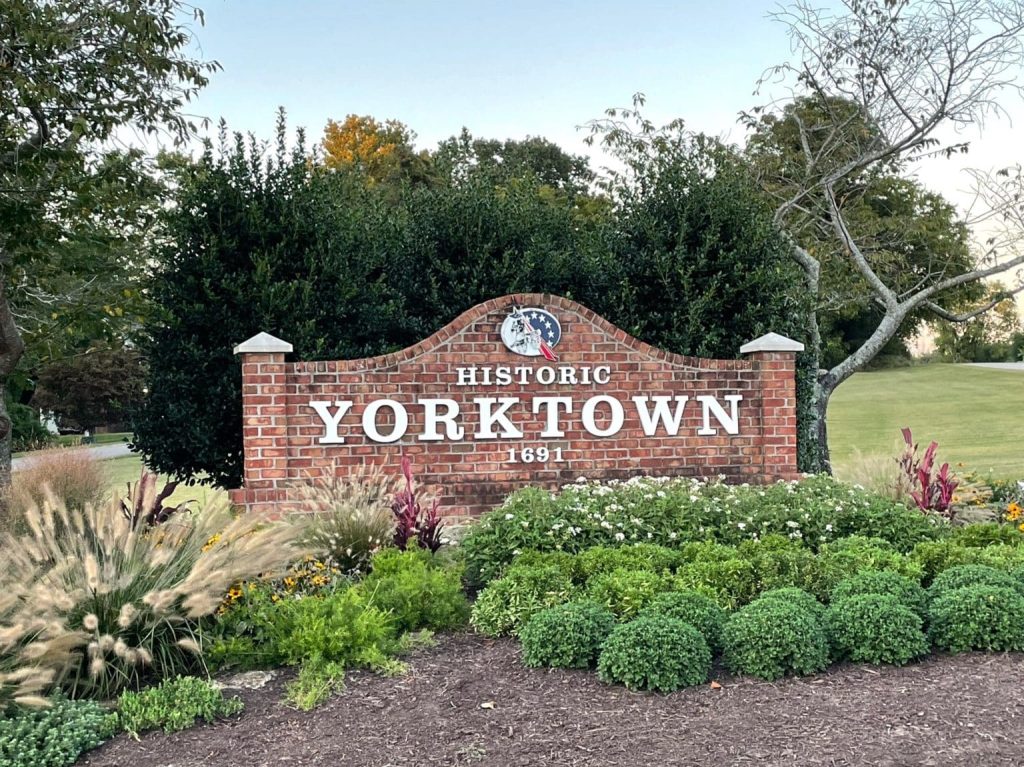
YORKTOWN – The York County Board of Supervisors revisited the controversial topic of cruise ship tourism in the area, voting to implement an ordinance that limits where large passenger vessels can dock in the county.
At its meeting on Tuesday, the board approved a measure that requires special use permits to be obtained by potential new docking stations.
The proposal pertains specifically to facilities designed to accommodate cruise ships carrying “more than four-hundred passengers and/or their passenger tender boats.” Any permit request would also need to be accompanied by a traffic impact analysis.
The zoning amendment requires the Planning Commission and the Board of Supervisors to hold public hearings to review “shoreside facilities proposed to receive large volumes of cruise ship passengers” to ensure their compatibility with the surrounding area, according to Jeanne Sgroi, Senior Planner for York County.
Sgroi said the four-hundred passenger limit was chosen because small cruise ships have already been docking in Yorktown without issue for years.
American Cruise Lines, for instance, currently offers 8-day, 7-night history-themed cruise that includes visits to Yorktown and Williamsburg as part of its itinerary. Those ships, however, have capacity limitations of only 90 to 130 guests.
Last year, Princess Cruises abruptly scrapped a plan to bring its commercial ships to Yorktown amid months of pushback from residents. A petition to block the cruise line from docking in town garnered more than 7,900 signatures.
The county’s newly adopted policy will apply not only to the construction of new docking stations but also to existing marinas that could be used for the purpose of accommodating large cruise ships.
“Some of the existing commercial and private marina properties, if they were so inclined, could construct docking facilities to accommodate passenger tender vessels for cruise ships,” the amendment states. “A large-scale passenger disembarkation operation at an existing marina facility could have a number of unintended consequences.”
York County Attorney Richard E. Hill stressed that the county is legally limited as far as what it can do to restrict cruise ship activity along its shores.
“We are not permitted to regulate or do anything that’s not specifically authorized by the General Assembly, and there are also federal statutes and federal rules,” Hill said. ” We have no ability to stop any ship from coming into the York River and from docking somewhere offshore from York County. That’s not within our purview. We have no authority to do it. If we tried, it would be pre-empted by federal law.”
Hill said the county is closely watching a case in Bar Harbor, Maine, a historic seaside community with a population of about 5,000 people. The town recently imposed, by citizen referendum, a 1,000 per day limitation on their cruise traffic.
That proposal is currently under review in federal court and has been opposed by “many of the business interests and tender boat drivers within that area,” according to Hill.
The ruling on the Bar Harbor resolution – which may end up in the U.S. Supreme Court – is expected to give the county insight into what is or is not legally acceptable in terms of limiting cruise ship traffic.
“I want everybody to understand that from a legal standpoint, we are very constrained in what we can do, and we are very limited in the powers that we have. We have to regulate in accordance with what state and federal law allows,” Hill added.
Four citizens spoke during the public comment portion of the hearing. Each speaker argued that the proposal did not go far enough to prevent large commercial cruise ships from coming to Yorktown’s shores.
Several pushed for the board to also require an independent environmental impact study to be conducted before permitting any new cruise ships to dock in the county.
“This special permit process is a good first step, but I think the language needs to be strengthened, and a more permanent prohibition needs to be pursued,” said Robert Hudson. “The industry has a track record of over-tourism in small communities like Yorktown. They have an abysmal pollution record, including significant unlawful violations.”
Elizabeth Wilkins thanked the board for putting forth the effort to reign in large cruise ship visits but said the proposal would only serve as a temporary solution.
“I’m still skeptical of the special use permit as a short-term check on the cruise industry’s lust for Yorktown, of course as a gateway to Williamsburg,” Wilkins said.
Supervisor Stephen Roane said that while the proposal may not be an ideal or complete solution, it’s an important first step toward restricting mega cruise ships in York County.
“We really are in a bit of a box here as far as what we can and can’t do. We can’t stop any ship from coming down the York river. A ship could come and dock 100 yards off of York County, and there’s not a thing we could do about it,” Roane said.
Supervisor Wayne Drewry agreed, saying it was vital to pass the proposal immediately to begin restricting potential mega cruise ship activity.
“We’ve got to put something in place,” said Drewry. “We’ve been looking at this for months and months now, and I think what we’re doing has the limitations to keep these large ships out of Yorktown. I think mostly the board is not agreeable to bringing large, mega cruise ships into Yorktown. It’s just not feasible for our town, for many reasons.”
Thanks for reading! Will you help make our journalism possible?
The Triangle is a uniquely independent news source for Virginia's Historic Triangle and the surrounding region. We need our community's support to keep producing quality local journalism.
Author