‘Legitimate concerns’: City of Williamsburg’s proposed tax hikes could negatively impact tourism, local economic expert says
WILLIAMSBURG – The City of Williamsburg may want to think twice before approving new tax hikes that could negatively impact tourism revenue, a local economic expert says.
According to Dr. Robert McNab, chairman of the Department of Economics at Old Dominion University, the city’s proposed new admissions tax and higher lodging and meals taxes could strain the local economy.
“There are legitimate concerns that, by levying a 10% admission tax, some visitors will decide to take their business elsewhere,” McNab told The Triangle.
City Manager Andrew Trivette’s proposed budget for fiscal year 2026 introduces a 10% admissions tax that would be applied to all ticketed events. It also includes a 1.5% meals tax increase and a 2% lodging tax increase.
Trivette said the hikes are needed because the city has experienced “economic cooling” over the last year, leading to slower revenue growth.
As previously reported, more than a dozen local residents pushed back against the proposed meals tax increase during a city council meeting last week. Many were restaurant owners who said the tax would hurt their bottom line.
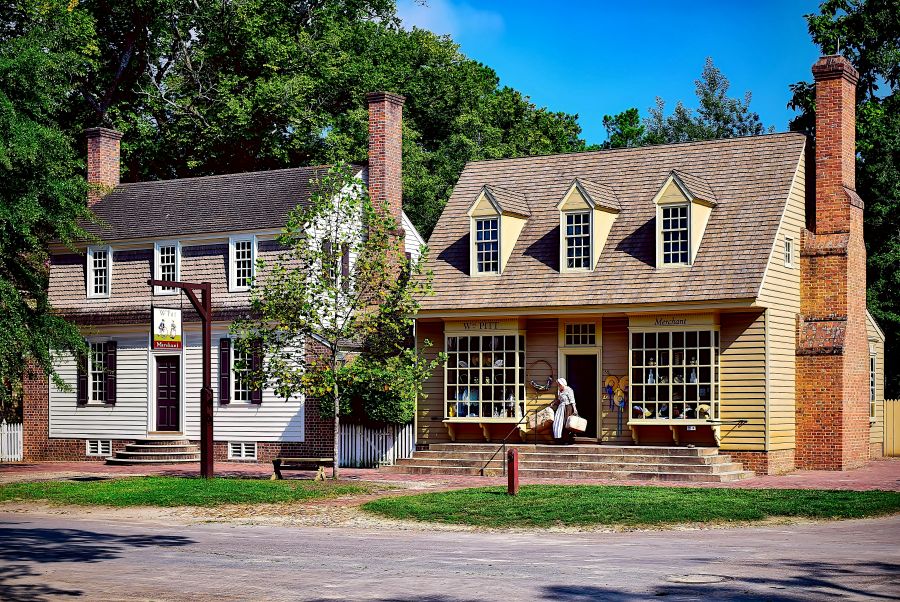
Ellen Peltz, spokeswoman for the Colonial Williamsburg Foundation, told The Triangle the higher taxes would also be detrimental to the world’s largest living history museum.
“The city of Williamsburg’s proposal to increase taxes on rooms and meals – and begin taxing admission tickets – jeopardizes the work of The Colonial Williamsburg Foundation and all local businesses to make Williamsburg an attractive destination for residents and visitors,” Peltz said.
McNab pointed out that several other Virginia localities have implemented an admissions tax, including Alexandria and Richmond. Williamsburg, however, is considering the maximum allowable admissions tax under state law.
According to Virginia code, the admissions tax “shall not exceed 10 percent of the amount of the charge for admissions charged for attendance” at any event.
While Alexandria charges a 10% admissions tax, it is capped at 50 cents per person. In Richmond, the admissions tax is limited to 7% of any charge for admission to all places of amusement or entertainment.
Peltz said the tax would not only directly impact Colonial Williamsburg’s guests but could also undermine the economic stability of the city.
“As the city’s largest taxpayer, Colonial Williamsburg and its guests will bear the brunt of these substantial tax hikes – but they also will hurt many other businesses,” she said. “Williamsburg will see a drop in commerce, and we will see local and tourism spending flow to neighboring counties which will have substantially lower tax rates.”
The majority of the 700 business establishments located in Williamsburg are connected to the tourism industry in some way, according to the city’s Economic Development Department. Most fall into the retail trade, accommodation or food services categories.
The city is heavily reliant on the revenue it generates from the area’s six to eight million annual visitors.
McNab speculated that city officials want to increase taxes on out-of-town visitors in order to avoid raising property taxes on residents.
“It would be reasonable to assume that most of the [admissions] tax would be paid for by non-local visitors, that is, the tax would be exported for the most part rather than paid for by local residents,” McNab said.
Lodging tax increases, he said, are also a means of lifting the burden off of locals.
“The same rationale is behind transient occupancy taxes,” McNab said. “Levying taxes on visitors is a strategy of collecting revenue without having to provide services to the visitors.”
Nonetheless, McNab warned the increases could harm Williamsburg’s economy, especially because tourism is expected to dwindle nationwide in the coming months.
“Given that economic growth appears to be slowing due to uncertainty regarding trade, immigration and fiscal policies at the federal level, tourism is likely to slow as well in the coming year,” McNab said.
Taxpayers and city officials ultimately need to examine the budget closely and decide if the tax hikes are worth the potential risks, according to McNab.
The U.S. economy is projected to face a $64 billion tourism loss in 2025 due to lower levels of both domestic and international travel, according to a report by Tourism Economics, a division of Oxford Economics.
“The open question is how responsive tourism is to an increase in price,” McNab said.
Citizens are invited to weigh in on the budget proposal by emailing the city manager or Council members directly at citymanager@williamsburgva.gov or council@williamsburgva.gov.
To view the city’s full proposed budget for FY2026, visit williamsburgva.gov/217/budget.
Thanks for reading! Will you help make our journalism possible?
The Triangle is a uniquely independent news source for Virginia's Historic Triangle and the surrounding region. We need our community's support to keep producing quality local journalism.
Author