As Virginia drought conditions worsen, officials urge commonsense water conservation
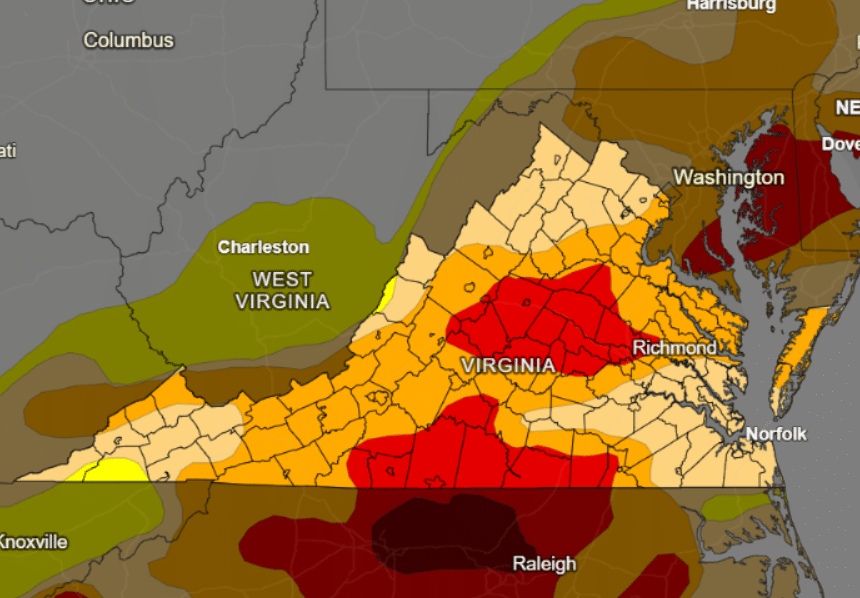
HISTORIC TRIANGLE – Virginia is currently experiencing the driest period recorded since 1941, resulting in both mandatory water restrictions and a call from Gov. Abigail Spanberger for commonsense water conservation.
According to state officials, precipitation levels are about eight inches below expected across most of the Commonwealth. Despite recent rain across much of the state, the larger trends of decreased precipitation have caused extreme drought conditions, a release from the governor’s office explains.
The Department of Environmental Quality’s Daily Drought Map indicates that 100 percent of Virginia’s land area is experiencing drought conditions, directly impacting more than 8 million people. Water reservoirs are currently in good shape, though rivers and groundwater are showing signs of severe hydrologic drought, sparking concern about water availability.
Drought conditions can have detrimental impacts on communities. Limited water resources can manifest in metrics such as soil moisture, where a decrease in water content can have negative consequences for agriculture. Dry soil has already delayed or prevented planting in some areas, potentially reducing yield potential. Additionally, crops and landscaping may get damaged, which could threaten the livelihoods of farmers.
Strained water systems often create domino effects that have far-reaching consequences, such as increased risk of wildfires, and negative impacts on public health and economic stability.
This current trend of insufficient precipitation is the direct result of the global weather pattern La Niña. The La Niña event brings hot and dry conditions to the Mid-Atlantic, which is forecasted to keep drought conditions intact.
While Virginians can’t avoid La Niña, and the larger-scale changing climate trends of the Mid-Atlantic, there are some ways communities are adjusting to the limited water supply.
Several local utility companies, including Aqua and Newport News Waterworks, have created, and subsequently expanded, voluntary water restrictions. However, as conditions have worsened, public water systems have instituted mandatory water restrictions for some localities, including Louisa, Caroline, Orange, Fauquier, and Shenandoah counties.
Mandatory water restrictions will generally prohibit watering lawns, while limiting watering gardens and washing cars. County approval is also required for filling large swimming pools. The goal is to conserve drinking water if the drought continues or intensifies.
Spanberger has also responded to the historic drought conditions on a statewide level by collaborating with the Virginia Drought Monitoring Task Force to find a suitable plan.
“As communities across the Commonwealth — particularly in Southside and Central Virginia — continue to be impacted by these conditions, it is important that we take commonsense steps to meet this challenge. I’m grateful to Virginians for doing their part, and my office will continue to remain in close coordination with the Virginia Drought Monitoring Task Force as we focus on safeguarding our water supply,” Spanberger said.
Some ways to reduce water use include avoiding filling swimming pools, washing vehicles or paved surfaces and turning off ornamental fountains. Additionally, residents can adjust their lawn and garden watering schedules by watering only between dusk and dawn or on fewer days.
To respond to agricultural concerns, Spanberger is coordinating with the USDA and federal partners to ensure resources are available for farmers that have been impacted by the drought.
If the drought continues to escalate, Spanberger stated that she may declare a Drought Emergency by executive order. This would bring about changes such as mandatory water restrictions and emergency responses from impacted agencies and localities.
The current drought is not forecasted to be resolved within the summer. Despite a recent uptick in rainfall in Virginia, the changes required to reverse this lack of water are long-term. These include an El Niño event, which would work opposite the La Niña event, bringing wetter conditions to the Mid Atlantic. A tropical system or hurricane would also correct the loss of precipitation.
While the larger scale climatic trends are out of the hands of ordinary people, Virginia residents can reduce the harmful impacts of the drought by reducing their personal water use. Officials say increased adherence to voluntary water use restrictions may help alleviate the situation.
“We all know that water is essential to our daily lives. Not just for our personal use, but also for our farmers, our small businesses, and our industries. Taking simple steps now to reduce our own consumption can help prevent more serious restrictions as we move into the summer months,” Secretary of Natural and Historic Resources David Bulova said.
Thanks for reading! Will you help make our journalism possible?
The Triangle is a uniquely independent news source for Virginia's Historic Triangle and the surrounding region. We need our community's support to keep producing quality local journalism.